










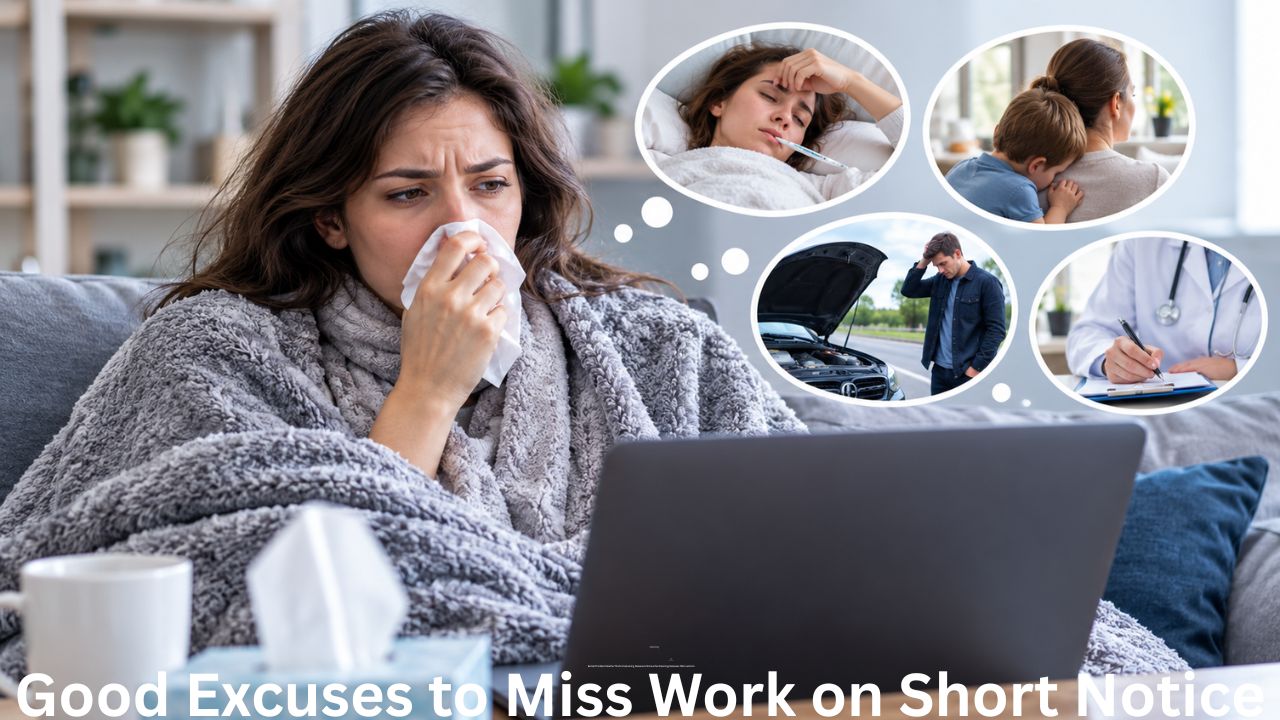
Missing work unexpectedly happens to everyone at some point. Whether you’re feeling sick, dealing with a family emergency, or facing an urgent personal issue, knowing good excuses to miss work on short notice can help you communicate professionally while maintaining trust with your employer.
The key isn’t finding the most creative excuse—it’s being honest, respectful, and notifying your employer as soon as possible. Most managers understand that life is unpredictable. What matters is how you handle the situation.
In this guide, you’ll learn legitimate reasons to miss work, tips for informing your employer, excuses to avoid, and best practices for maintaining a professional reputation.
Why Giving a Good Excuse Matters
Calling out of work without a valid reason can damage your credibility. A thoughtful and genuine explanation helps your employer understand your situation while showing that you respect company policies.
A good excuse should be:
- Honest whenever possible
- Easy to understand
- Communicated as early as possible
- Appropriate for your workplace
- Free from unnecessary personal details
Remember, your manager doesn’t always need your full life story. A brief and respectful explanation is usually enough.
Best Good Excuses to Miss Work on Short Notice
Here are some of the most acceptable and commonly used reasons.
| Sudden illness | ✅ Yes | One of the most common reasons |
| Family emergency | ✅ Yes | Keep details private if needed |
| Medical appointment | ✅ Yes | Especially urgent appointments |
| Food poisoning | ✅ Yes | Usually requires rest |
| Migraine | ✅ Yes | Can make working impossible |
| Childcare emergency | ✅ Yes | Common for working parents |
| Car trouble | ✅ Yes | Inform employer immediately |
| Home emergency | ✅ Yes | Examples include plumbing or power issues |
| Mental health day | ✅ Depends | Increasingly accepted in many workplaces |
| Bereavement | ✅ Yes | Most employers are understanding |
Sudden Illness
The most widely accepted reason for missing work is getting sick unexpectedly.
Examples include:
- Fever
- Flu symptoms
- Stomach virus
- Severe cold
- Food poisoning
- Vomiting
If you’re contagious, staying home also protects your coworkers.
Example:
“I’m not feeling well this morning and won’t be able to come in today. I’ll keep you updated about tomorrow.”
Family Emergency
Unexpected family situations can happen without warning.
Examples include:
- A loved one is hospitalized
- An elderly family member needs assistance
- A child becomes sick
- An urgent family matter requires your attention
Most employers recognize that family responsibilities sometimes take priority.
Food Poisoning or Stomach Issues
Digestive illnesses often appear suddenly and make it impossible to work comfortably.
Symptoms may include:
- Vomiting
- Diarrhea
- Severe stomach cramps
- Nausea
Since these illnesses can also spread, employers usually prefer employees to recover at home.
Severe Migraine
Migraines are far more serious than ordinary headaches.
They may cause:
- Blurred vision
- Light sensitivity
- Dizziness
- Nausea
- Difficulty concentrating
If your migraine prevents you from working safely or effectively, staying home is reasonable.
Medical Emergency or Urgent Appointment
Sometimes doctors schedule same-day appointments because immediate care is necessary.
Examples include:
- Emergency dental treatment
- Unexpected medical tests
- Specialist consultation
- Urgent clinic visit
Keep your explanation simple.
Example:
“I have an urgent medical appointment today that I can’t reschedule.”
Childcare Issues
Parents occasionally face unexpected childcare problems.
Possible situations include:
- Babysitter cancels
- Daycare closes unexpectedly
- Child becomes ill
- School emergency
Most employers understand that these situations are outside your control.

Car Problems or Transportation Issues
Transportation failures happen unexpectedly.
Examples:
- Flat tire
- Dead battery
- Car accident
- Engine failure
- Public transportation disruption
Whenever possible, estimate your arrival time instead of taking the entire day off.
Example:
“My car won’t start this morning. I’m arranging repairs and will update you as soon as I know whether I can make it in.”
Home Emergency
Certain home problems require immediate attention.
Examples include:
- Burst water pipe
- Gas leak
- Electrical issue
- Flooding
- Broken heating or cooling system
Emergencies affecting safety should always be addressed immediately.
Mental Health Day
Mental health is an important part of overall well-being.
If stress, anxiety, or burnout has reached the point where you cannot perform effectively, taking time to recover may be appropriate, especially if your workplace supports mental wellness.
You don’t have to share private medical information.
Example:
Bereavement
The loss of a loved one is a valid reason to miss work.
Many employers provide bereavement leave, but even if they don’t, most managers are compassionate during difficult times.
Personal Emergency
Sometimes personal matters require immediate attention.
Examples include:
- Legal appointment
- Banking emergency
- Identity theft
- Important government appointment
Keep the explanation professional without revealing unnecessary details.
Tips for Informing Your Employer
How you communicate is often just as important as your reason.
Follow these best practices:
- Notify your employer as early as possible.
- Call instead of texting if company policy requires it.
- Be polite and professional.
- Avoid dramatic explanations.
- Offer updates if your absence extends beyond one day.
- Follow your workplace attendance policy.
A respectful message creates a positive impression.
Sample Messages for Calling Out
Simple Sick Day
“Hi, I’m feeling unwell this morning and won’t be able to come into work today. I’ll rest and keep you updated regarding tomorrow.”
Family Emergency
“I have an unexpected family emergency and need to take today off. Thank you for understanding.”
Car Trouble
“My car broke down this morning, and I’m waiting for roadside assistance. I’ll update you as soon as I know whether I can make it to work.”
Medical Appointment
“I have an urgent medical appointment today that I cannot postpone, so I won’t be able to work today.”
Excuses You Should Avoid
Some excuses can damage trust if they’re obviously false or difficult to believe.
Avoid using:
- Internet outages without proof (if working remotely)
- “My alarm didn’t go off”
- Oversleeping
- Fake illnesses
- Made-up family emergencies
- Repeated pet emergencies
- Unrealistic stories
Once an employer loses confidence in your honesty, rebuilding trust can be difficult.
Should You Tell the Whole Truth?
In most situations, yes.
However, honesty doesn’t mean revealing every personal detail.
Instead of saying:
“I’ve been having panic attacks because of several personal problems.”
You could simply say:
“I’m dealing with a health issue today and won’t be able to work.”
This protects your privacy while remaining truthful.
How Often Is Too Often?
Even legitimate excuses lose credibility if they happen frequently.
If you regularly need time off:
- Discuss accommodations with your employer.
- Review available leave options.
- Consider flexible scheduling if possible.
- Keep communication open.
Reliability remains one of the most valued workplace qualities.

Balancing Professionalism and Personal Well-Being
Many employees feel guilty about missing work.
Remember:
- Rest helps you recover faster.
- Sick employees can spread illness.
- Working while exhausted often reduces productivity.
- Employers generally appreciate honest communication.
Taking a necessary day off is better than performing poorly or risking your health.
Frequently Asked Questions
Is it okay to miss work on short notice?
Yes. Unexpected illnesses, emergencies, transportation problems, and urgent personal matters can happen. Notify your employer as soon as possible and follow company procedures.
What is the best excuse to miss work?
Sudden illness is one of the most widely accepted reasons. Other legitimate excuses include family emergencies, medical appointments, childcare issues, and transportation breakdowns.
Should I text or call my manager?
Follow your workplace policy. If there is no specific rule, calling is often more professional for last-minute absences, while texting may be acceptable in some workplaces.
Do I need to provide proof?
Not always. Some employers require a doctor’s note only after multiple consecutive sick days or extended absences. Check your company’s attendance policy.
Can I take a mental health day?
Many employers now recognize mental health as an important part of overall wellness. If your workplace allows it, taking a mental health day can be appropriate without sharing unnecessary personal details.
Is lying about being sick a good idea?
No. Dishonest excuses can damage your credibility and professional reputation. It’s always better to provide a truthful, concise explanation.
Final Thoughts
Finding good excuses to miss work on short notice isn’t about inventing convincing stories—it’s about communicating honestly and professionally when unexpected situations arise. Whether you’re dealing with an illness, family emergency, transportation issue, or another legitimate concern, informing your employer promptly and respectfully helps maintain trust.
The most effective approach is to be truthful, keep your explanation brief, and follow your company’s attendance policy. Over time, a reputation for honesty and reliability will matter far more than any single day you need to be away from work.
Also Read: Paula Profit: Everything to Know About Charlie Sheen’s Former Partner and Her Life Today




One thought on “Good Excuses to Miss Work on Short Notice: Honest Reasons That Actually Work”
Comments are closed.