









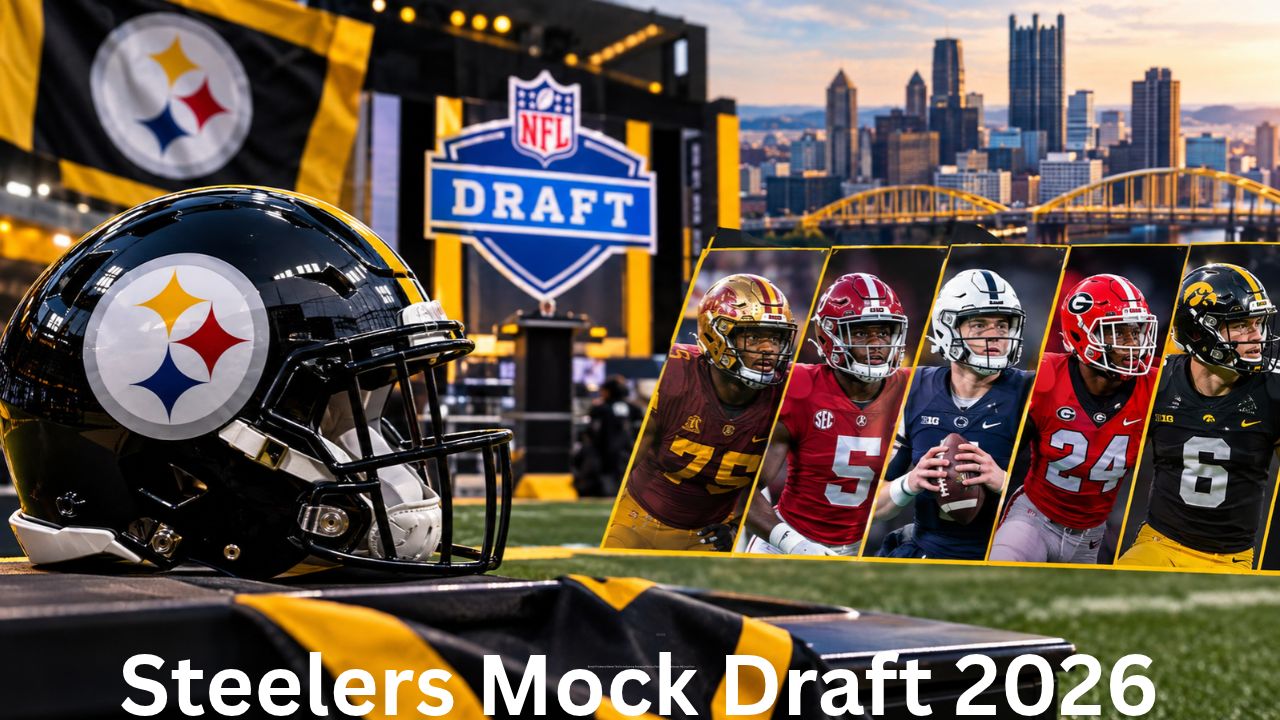
The Steelers mock draft 2026 conversation generated plenty of interest before the NFL Draft, particularly because Pittsburgh entered the offseason with several important roster questions. Quarterback, offensive line, wide receiver, tight end, linebacker, and secondary depth were among the areas that attracted attention as analysts projected possible selections.
Now that the 2026 NFL Draft is complete, there is a useful way to look back at those projections: compare the needs that were identified before the draft with the players Pittsburgh ultimately selected.
The Pittsburgh Steelers finished the 2026 draft with 10 selections. The class included an offensive tackle in Round 1, a wide receiver in Round 2, a quarterback and cornerback in Round 3, and additional reinforcements on both sides of the ball during the later rounds.
This guide looks at the Steelers’ 2026 draft class, the major positions that shaped mock draft discussions, and what each selection potentially brings to Pittsburgh.
Steelers Mock Draft 2026: What Were the Biggest Needs?
Before the draft, Pittsburgh had several areas that could reasonably have been targeted by a mock draft.
NFL.com’s pre-draft needs analysis identified quarterback, offensive line, wide receiver, tight end, and linebacker among the Steelers’ major needs. The quarterback situation received particular attention because of uncertainty surrounding Aaron Rodgers and the team’s longer-term plans at the position.
Offensive line was another logical focus. Pittsburgh had lost left guard Isaac Seumalo during free agency, creating an opportunity to add more young talent up front.
The Steelers also needed additional offensive weapons and depth across several positions.
Those needs made the team difficult to predict in mock drafts. Depending on the scenario, analysts could reasonably project an offensive lineman, quarterback, receiver, defender, or another position of need.
Pittsburgh Steelers 2026 Draft Picks
The Steelers ultimately made 10 selections during the 2026 NFL Draft.
| Round | Pick | Player | Position | College |
|---|---|---|---|---|
| 1 | 21 | Max Iheanachor | OT | Arizona State |
| 2 | 47 | Germie Bernard | WR | Alabama |
| 3 | 76 | Drew Allar | QB | Penn State |
| 3 | 85 | Daylen Everette | CB | Georgia |
| 3 | 96 | Gennings Dunker | G | Iowa |
| 4 | 121 | Kaden Wetjen | WR | Iowa |
| 5 | 169 | Riley Nowakowski | FB | Indiana |
| 6 | 210 | Gabriel Rubio | DE | Notre Dame |
| 7 | 224 | Robert Spears-Jennings | S | Oklahoma |
| 7 | 230 | Eli Heidenreich | RB | Navy |
The official Steelers draft recap confirms that Pittsburgh selected 10 players, beginning with Max Iheanachor at No. 21 overall.
Round 1: Max Iheanachor Gives the Steelers More Offensive Line Talent
With the 21st overall selection, Pittsburgh selected offensive tackle Max Iheanachor from Arizona State.
The selection addressed one of the most frequently discussed areas in Steelers mock drafts: the offensive line.
Iheanachor entered the NFL with a combination of size, athletic ability, and developmental potential. NFL.com’s scouting analysis highlighted his length, lean mass, play strength, and athletic upside while also noting areas of his technique that could continue to improve.
The Steelers’ own draft coverage also emphasized how excited the organization was about adding him.
One interesting aspect of the selection is that Iheanachor was viewed as a player who could potentially contribute at tackle while giving the team flexibility with its offensive-line alignment.
For a team looking to build a younger offensive line, adding a first-round tackle gives Pittsburgh another important piece to develop.
Round 2: Germie Bernard Adds Another Wide Receiver
The Steelers used their second-round selection on Germie Bernard, an Alabama wide receiver.
Bernard brings versatility to the receiving group. NFL.com’s analysis described him as a receiver capable of working both outside and from the slot, with the ability to run routes at different levels of the field. His run-after-catch ability was also identified as one of his strengths.
The pick made sense within the broader conversation around Pittsburgh’s offensive weapons.
Adding another receiver gives the offense more options and competition while allowing the coaching staff to determine how Bernard best fits into the passing game.
His versatility could become particularly useful if Pittsburgh wants to move receivers around the formation rather than keeping them locked into one position.
Round 3: Drew Allar Becomes an Important Quarterback Addition
Quarterback was one of the biggest storylines surrounding the Steelers mock draft 2026 cycle.
Pittsburgh addressed the position in the third round by selecting Drew Allar from Penn State with the 76th overall pick.
The selection gave the Steelers another young quarterback to develop and provided the organization with a potential long-term option behind the veterans already on the roster.
The decision was notable because quarterback discussions had been one of the central themes surrounding Pittsburgh throughout the pre-draft period.
Rather than waiting until the later rounds, the Steelers invested a third-round selection in a quarterback with significant college experience.
The official Steelers draft coverage confirms Allar was one of three players Pittsburgh selected during the third round.
Round 3: Daylen Everette Strengthens the Secondary
Pittsburgh stayed busy in Round 3, selecting Georgia cornerback Daylen Everette with pick No. 85.
Everette gives the Steelers another young defensive back to develop.
NFL.com’s draft tracker highlighted his size, physical approach, experience, and coverage tools while also pointing out areas that would need refinement at the professional level.
Adding a cornerback in the third round also fits the broader strategy of building depth rather than relying exclusively on veteran players.
The secondary is a position where injuries and matchup requirements can quickly change a team’s depth chart, so adding developmental talent can be valuable over the course of a long NFL season.
Round 3: Gennings Dunker Adds More Offensive Line Depth
The Steelers made another offensive-line investment later in the third round by selecting Gennings Dunker from Iowa with pick No. 96.
Dunker had experience as a multi-year starter and entered the league with a pro-ready frame.
NFL.com’s evaluation suggested that his future could involve a move inside to guard, where his physical strengths could potentially become more useful.
The selection was another indication that Pittsburgh wanted to continue building depth in the trenches.
Having multiple young offensive linemen competing for roles can give a team more flexibility when injuries or performance changes affect the starting lineup.

Round 4: Kaden Wetjen Brings Receiving and Return Ability
In Round 4, Pittsburgh selected Iowa wide receiver Kaden Wetjen at No. 121.
Wetjen’s value extends beyond traditional receiving duties. His college career included extensive work as a punt and kickoff returner.
According to the Steelers, Wetjen recorded 954 punt-return yards and 1,538 kickoff-return yards during his college career, along with multiple return touchdowns.
That special-teams experience gives him another potential pathway to contributing to the team.
For later-round selections, versatility can be especially important because players often need to contribute on special teams while developing their offensive or defensive roles.
Later-Round Selections
Pittsburgh continued adding depth after the fourth round.
The Steelers selected Riley Nowakowski, a fullback from Indiana, in Round 5. They then selected defensive lineman Gabriel Rubio in Round 6.
The final two selections came in Round 7: safety Robert Spears-Jennings from Oklahoma and versatile offensive player Eli Heidenreich from Navy.
These selections gave Pittsburgh additional competition at several positions.
Late-round players can have different paths to making an NFL roster. Some develop into rotational players, while others make their biggest contributions through special teams.
How the Final Draft Compared With Mock Draft Expectations
One of the interesting things about a Steelers mock draft 2026 article is that pre-draft projections were never guaranteed to match the final board.
Steelers-related mock draft coverage before the draft showed several different possibilities for Pittsburgh’s first-round selection.
For example, the Steelers’ own “On The Clock” mock draft series featured different analysts projecting different players to Pittsburgh at No. 21. One projection selected Max Iheanachor, another selected Penn State interior offensive lineman Olaivavega Ioane, and another projected Oregon safety Dillon Thieneman.
That variation illustrates why mock drafts should be treated as projections rather than predictions of what will definitely happen.
Draft boards change because of team needs, trades, player availability, medical evaluations, scouting reports, and unexpected selections by other teams.
Key Takeaways From the Steelers 2026 Draft
Looking at the completed class, several themes stand out.
1. Pittsburgh Invested Heavily in the Offensive Line
Iheanachor and Dunker both add young talent to the offensive line.
That gives Pittsburgh additional players to develop while creating competition for future starting and rotational roles.
2. Quarterback Remained a Major Priority
Selecting Drew Allar in Round 3 shows that the Steelers did not ignore the quarterback position.
The pick gives the organization another young player to evaluate and develop over the coming seasons.
3. The Steelers Added More Offensive Weapons
Bernard and Wetjen strengthened the wide receiver room, while Heidenreich added another versatile offensive option late in the draft.
4. Pittsburgh Added Defensive Depth
Everette, Rubio, and Spears-Jennings give the defense additional young talent at cornerback, defensive line, and safety.
Why Steelers Mock Draft 2026 Is Still a Useful Search Topic
Although the 2026 NFL Draft is already complete, searches for steelers mock draft 2026 can still be useful for fans researching how the team’s draft process unfolded.
A good post-draft article should make the timeline clear rather than presenting old projections as if the draft is still upcoming.
Readers may want to compare:
- Pre-draft mock selections
- Pittsburgh’s actual draft picks
- Positional needs entering the draft
- Player scouting reports
- Draft-round distribution
- How the roster was addressed
- Potential development paths for rookies
This also creates a natural bridge toward future Steelers draft coverage.
As the 2026 season develops, actual rookie performances will provide more meaningful information than pre-draft projections.
Frequently Asked Questions
What was the Steelers’ first pick in the 2026 NFL Draft?
The Steelers selected offensive tackle Max Iheanachor from Arizona State with the 21st overall pick in the first round.
Who did the Steelers draft at quarterback in 2026?
Pittsburgh selected Drew Allar from Penn State with the 76th overall pick in Round 3.
How many players did the Steelers select in the 2026 NFL Draft?
The Steelers made 10 selections during the 2026 NFL Draft.
Who was the Steelers’ second-round pick in 2026?
Pittsburgh selected Germie Bernard, a wide receiver from Alabama, with pick No. 47 in the second round.
Did the Steelers draft an offensive lineman in 2026?
Yes. The Steelers selected Max Iheanachor in Round 1 and Gennings Dunker in Round 3, adding two young offensive linemen to the roster.
Is a Steelers mock draft the same as the actual NFL Draft?
No. A mock draft is a projection created before the draft. The actual draft is determined by the selections made by NFL teams on draft night. Mock drafts can be useful for discussing possible outcomes, but they are not official team decisions.
Final Thoughts
The Steelers mock draft 2026 conversation featured several possible directions for Pittsburgh, with quarterback, offensive line, receiver, and defensive positions all receiving attention.
The actual draft produced a 10-player class led by first-round offensive tackle Max Iheanachor. Pittsburgh then added Germie Bernard, Drew Allar, Daylen Everette, Gennings Dunker, Kaden Wetjen, Riley Nowakowski, Gabriel Rubio, Robert Spears-Jennings, and Eli Heidenreich.
The most important part of the draft process now moves beyond mock drafts. These players will have to develop, compete for roster spots, and eventually establish their roles at the NFL level.
For Steelers fans, the 2026 class provides plenty of young talent to follow throughout the season, while the performances of these rookies will eventually provide a much clearer picture than any pre-draft projection could.
Also Read: Chris Evans and Mort Zuckerman: Two Very Different Public Figures