










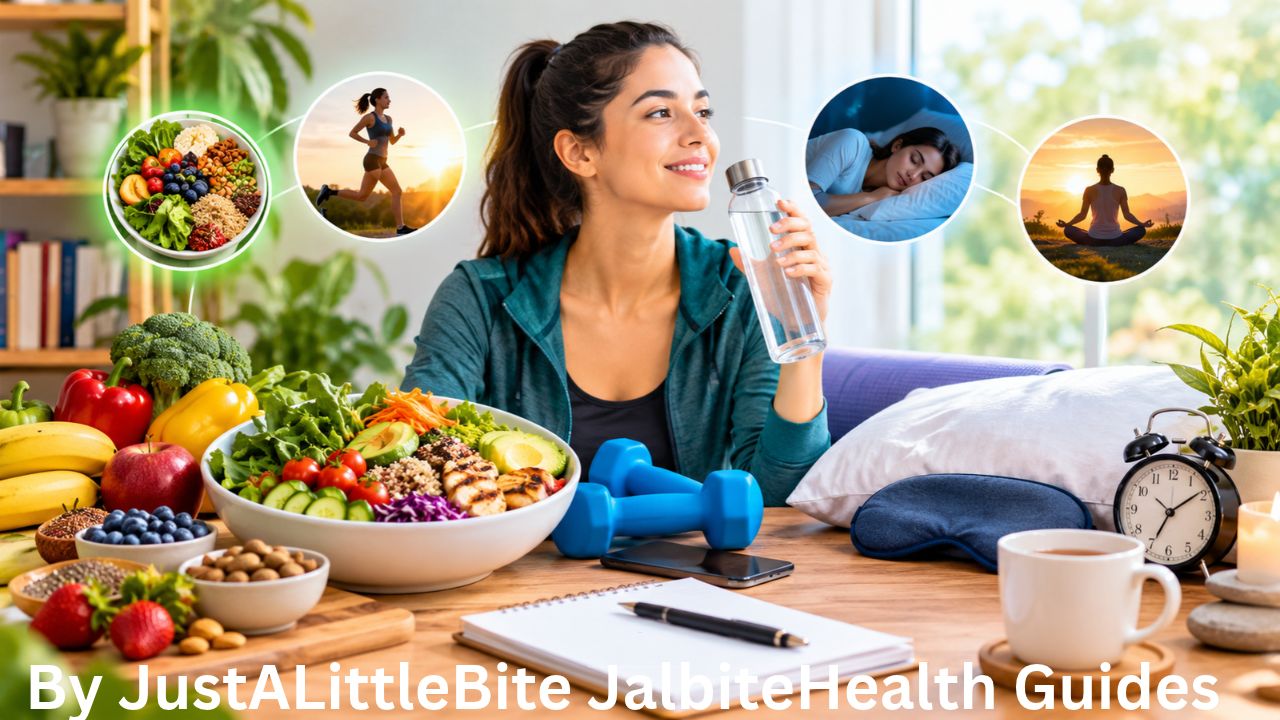
Taking care of your health does not always require complicated routines, expensive products, or dramatic lifestyle changes. In many cases, better health begins with simple decisions that can be repeated consistently. Eating balanced meals, staying active, getting enough sleep, managing stress, and paying attention to everyday habits can make a meaningful difference over time.
The by JustALittleBite JalbiteHealth guides approach focuses on making health and wellness information easier to understand and apply in everyday life. Instead of treating wellness as a one-size-fits-all formula, useful health guidance should help people understand their choices and make realistic improvements that fit their routines.
Whether you are interested in nutrition, healthy eating, fitness, sleep, or general wellness, practical information can help you build better habits without feeling overwhelmed.
What Are By JustALittleBite JalbiteHealth Guides?
By JustALittleBite JalbiteHealth guides can be understood as practical wellness resources designed around everyday health questions and lifestyle choices. The idea is to make useful information approachable, understandable, and easier to put into practice.
Health information can sometimes feel unnecessarily complicated. Scientific terminology, conflicting advice, and constantly changing trends can make it difficult for readers to know where to start.
A good wellness guide should simplify the basics without oversimplifying important details.
For example, instead of simply saying that people should “eat healthier,” a useful guide can explain what a balanced meal looks like, how to choose nutritious ingredients, and how to make small changes that are sustainable.
Why Practical Health Guidance Matters
There is an enormous amount of health information available online. The challenge is not finding information; it is finding information that is understandable, responsible, and genuinely useful.
Practical health guidance can help readers:
- Understand basic nutrition principles
- Develop healthier eating habits
- Create realistic fitness routines
- Improve daily sleep habits
- Recognize the importance of hydration
- Manage everyday stress
- Make more informed lifestyle decisions
- Avoid extreme or unrealistic wellness trends
The most effective health habits are usually the ones people can maintain over time. A small improvement repeated consistently may be more useful than an ambitious routine that lasts only a few days.
Building a Balanced Approach to Nutrition
Nutrition is one of the most important areas of everyday wellness. Food provides the energy and nutrients the body needs to function, but healthy eating does not mean every meal has to be perfect.
A balanced diet generally includes a variety of foods from different food groups. Fruits, vegetables, whole grains, protein sources, and healthy fats can all have a place in a well-rounded eating pattern.
Instead of focusing on eliminating individual foods, consider the overall quality and variety of your meals.
Simple Ways to Improve Everyday Meals
You can make meals more balanced by trying a few straightforward habits:
- Add vegetables or fruit to meals when possible.
- Choose whole-grain options more often.
- Include a source of protein in main meals.
- Drink water regularly throughout the day.
- Pay attention to portion sizes.
- Limit highly processed foods when practical.
- Avoid relying on one “superfood” as a solution to every health concern.
Healthy eating should also be enjoyable. Food preferences, cultural traditions, budget, availability, and personal routines all influence what works for an individual.
The Role of Hydration in Wellness
Water is essential for normal body functions. People lose fluids throughout the day through breathing, sweating, and other normal processes, so regular fluid intake is important.
How much fluid a person needs can vary depending on factors such as physical activity, climate, diet, and individual circumstances.
Rather than becoming obsessed with a specific number, pay attention to your body’s needs and make water a regular part of your daily routine.
Keeping a reusable water bottle nearby can be a simple reminder to drink throughout the day.
Why Physical Activity Should Be Part of Your Routine
Exercise is another important part of a healthy lifestyle. However, physical activity does not have to mean spending hours in a gym.
Walking, cycling, swimming, dancing, stretching, recreational sports, and strength exercises can all contribute to an active lifestyle.
The best activity is often the one you enjoy enough to continue doing.
Making Exercise More Sustainable
If you are starting a new routine, begin at a manageable level. Trying to do too much too quickly can make exercise feel exhausting and difficult to maintain.
Consider:
- Taking regular walks
- Using stairs when appropriate
- Adding short movement breaks during long periods of sitting
- Practicing basic strength exercises
- Stretching regularly
- Choosing activities you genuinely enjoy
Consistency matters more than trying to achieve an unrealistic routine immediately.
Sleep and Its Connection to Daily Wellness
Sleep is sometimes treated as an optional part of a busy lifestyle, but it plays an important role in overall health and daily functioning.
Poor sleep can affect concentration, mood, energy, and the ability to handle normal daily demands. Creating a consistent bedtime routine can make it easier to develop healthier sleep habits.
Some practical strategies include:
- Going to bed and waking up at relatively consistent times
- Creating a relaxing bedtime routine
- Keeping the bedroom comfortable and quiet
- Limiting stimulating activities close to bedtime
- Reducing unnecessary screen use before sleeping
If persistent sleep problems are affecting daily life, it is appropriate to discuss them with a qualified healthcare professional.
Managing Everyday Stress
Stress is a normal part of life, but constant or overwhelming stress can become difficult to manage.
Wellness should therefore include mental and emotional wellbeing, not just food and exercise.
Simple strategies may include:
- Taking short breaks during demanding days
- Spending time outdoors
- Practicing relaxation or breathing exercises
- Talking with trusted friends or family
- Maintaining enjoyable hobbies
- Organizing tasks instead of trying to handle everything simultaneously
There is no universal stress-management method. What works for one person may not work for another, so experimenting with healthy strategies can help you discover what fits your lifestyle.
Small Habits Can Create Bigger Changes
One of the most useful ideas in everyday wellness is that healthy living does not have to happen all at once.
For example, someone who rarely exercises does not necessarily need to start with an intense workout program. Beginning with a short daily walk may be more realistic.
Likewise, someone trying to improve their diet could start by adding one nutritious food to a daily meal instead of completely changing everything overnight.
Here is a simple way to think about gradual improvement:
| Wellness Area | Small Starting Habit | Possible Long-Term Benefit |
|---|---|---|
| Nutrition | Add more fruits or vegetables | More balanced eating pattern |
| Hydration | Keep water nearby | More consistent fluid intake |
| Exercise | Take a daily walk | Greater regular physical activity |
| Sleep | Keep a consistent bedtime | Better sleep routine |
| Stress | Take short relaxation breaks | Improved stress management |
| Daily routine | Plan meals and activities | Greater consistency |
The goal is not perfection. The goal is creating habits that are realistic enough to continue.
Avoiding Extreme Wellness Advice
Health content online can sometimes promote quick fixes, restrictive diets, miracle products, or dramatic transformations. Readers should approach these claims carefully.
A trustworthy wellness approach generally recognizes that health is influenced by many factors and that individual needs differ.
Be especially cautious when a health claim:
- Promises immediate or guaranteed results
- Suggests one product can solve multiple health problems
- Encourages extremely restrictive eating
- Tells readers to ignore medical professionals
- Uses fear to sell a product or program
- Presents anecdotal experiences as universal medical evidence
Reliable health information should encourage informed decisions rather than unrealistic expectations.
How to Use Health Guides Responsibly
Resources such as the by JustALittleBite JalbiteHealth guides can be useful for learning about wellness topics, but general online information should not replace individualized medical advice.
When reading health content, consider the source, the evidence behind a claim, and whether the advice is appropriate for your circumstances.
For specific medical conditions, symptoms, medications, allergies, pregnancy-related concerns, or significant dietary changes, consult an appropriately qualified healthcare professional.
A good guide should help readers ask better questions and make informed choices—not encourage them to diagnose or treat serious conditions themselves.
Creating Your Own Everyday Wellness Plan
You do not need a complicated spreadsheet or expensive program to begin improving your routine.
Start by choosing a few areas that matter most to you.
For example:
- Choose one nutrition habit to improve.
- Add a manageable amount of physical activity.
- Establish a more consistent sleep schedule.
- Make time for relaxation.
- Review your progress after a few weeks.
- Adjust the routine based on what is realistic.
This approach makes wellness feel more achievable because you are working with your existing lifestyle instead of trying to completely replace it.
Frequently Asked Questions
What are by JustALittleBite JalbiteHealth guides?
They can be viewed as practical wellness-focused guides covering everyday topics such as nutrition, healthy habits, physical activity, sleep, hydration, and general wellbeing. Their usefulness comes from presenting health concepts in an approachable way.
Are health guides a replacement for a doctor?
No. General health guides are educational resources and cannot replace personalized medical evaluation or treatment. Anyone experiencing persistent, severe, or concerning symptoms should seek advice from a qualified healthcare professional.
What is the easiest healthy habit to start with?
There is no single habit that works for everyone, but simple changes such as drinking water regularly, adding nutritious foods to meals, walking more often, or establishing a consistent sleep schedule can be practical starting points.
Do I need a strict diet to become healthier?
Not necessarily. A balanced eating pattern can often be more sustainable than an extremely restrictive diet. Variety, moderation, nutrient-rich foods, and consistency are generally more useful concepts than chasing a perfect diet.
How can I stay consistent with healthy habits?
Start small and make your goals realistic. A habit that fits naturally into your daily schedule is usually easier to maintain than a demanding routine. Tracking progress and making gradual adjustments can also help.
Should online health advice always be trusted?
No. Online information varies greatly in quality. Look for reliable sources, avoid miracle claims, and consider whether advice is supported by credible evidence. For personal medical concerns, speak with a qualified healthcare professional.
Final Thoughts
Healthy living is not about making every decision perfectly. It is about developing habits that support your wellbeing and can realistically become part of your everyday life.
The by JustALittleBite JalbiteHealth guides concept highlights an important principle: useful health information should be practical, understandable, and focused on sustainable choices. Whether you are improving your nutrition, becoming more active, working on your sleep, or looking for better ways to manage everyday stress, small steps can provide a sensible starting point.
Rather than searching for a quick solution, focus on habits you can maintain. Learn from reliable information, pay attention to your individual needs, and seek professional guidance when a health concern requires personalized care. Over time, those consistent choices can become a meaningful part of a healthier lifestyle.
Also Read: Shermichael Singleton: Career, Background, Work, and What You Should Know


One thought on “By JustALittleBite JalbiteHealth Guides: Practical Tips for Better Everyday Wellness”
Comments are closed.