










The real estate industry has changed dramatically over the past decade. Gone are the days when buying a home meant spending every weekend visiting properties, searching through newspaper listings, and relying entirely on traditional real estate agents. Today, digital platforms, artificial intelligence, and virtual property tours are making the process faster, more convenient, and easier to navigate.
One interesting topic gaining attention in this evolving industry is HomeRocketRealty modern technology. The term reflects the growing relationship between real estate services and modern digital solutions that help buyers, sellers, and property professionals make informed decisions.
From AI-powered property searches to smart home integrations, technology is reshaping nearly every stage of the real estate experience.
But how does modern technology actually improve real estate transactions? What tools matter most, and what should buyers and sellers consider before relying on digital solutions?
This guide explores the technologies associated with modern real estate platforms, their practical benefits, potential challenges, and the trends shaping the future of property transactions.
What Is HomeRocketRealty Modern Technology?
HomeRocketRealty modern technology is a term associated with the use of advanced digital tools and innovative solutions in the real estate industry.
It can be understood through technologies such as artificial intelligence, online property listings, virtual home tours, digital communication systems, and data-driven property analysis.
These technologies are designed to simplify property-related activities and improve how people interact with the housing market.
Rather than depending entirely on traditional processes, modern real estate services increasingly use digital systems to organize property information, connect buyers with sellers, and support important decisions.
The concept generally focuses on three important goals:
- Convenience: Making property searches and transactions easier.
- Efficiency: Reducing unnecessary paperwork and repetitive tasks.
- Transparency: Providing clearer information about properties, prices, and market conditions.
It is important to distinguish these broader industry technologies from the verified features of any particular company. Specific HomeRocketRealty products, services, and technical capabilities should be confirmed through official company information.
How Modern Technology Is Changing the Real Estate Industry
Technology has influenced almost every major industry, and real estate is no exception.
Traditional property transactions often involve multiple appointments, physical documents, telephone conversations, and time-consuming negotiations.
Digital tools can reduce some of these difficulties by making information easier to access and improving communication between the parties involved.
For example, a potential buyer can now explore available properties, compare neighborhoods, estimate monthly mortgage payments, and schedule viewings without leaving home.
Similarly, sellers can use digital marketing platforms to reach a larger audience and present their properties through professional photography and interactive virtual tours.
Real estate professionals also benefit from systems that organize customer inquiries, track market trends, and manage property information.
The result is a more connected property market where information can move quickly between buyers, sellers, agents, and service providers.
However, technology does not eliminate the need for professional advice, accurate property inspections, or careful financial planning.
Key Technologies Transforming Modern Real Estate
Several technologies are playing an important role in the development of digital real estate services.
Understanding these innovations helps explain the broader ideas behind HomeRocketRealty modern technology.
1. Artificial Intelligence in Property Searches
Artificial intelligence has become one of the most influential technologies in modern real estate.
AI-powered systems can analyze large amounts of property information and identify listings that match a buyer’s preferences.
For example, someone searching for a family home may prioritize:
- Three or more bedrooms
- Nearby schools
- A specific price range
- Low-maintenance outdoor space
- Convenient transportation options
An intelligent recommendation system can use these preferences to suggest suitable properties.
Some platforms also use machine learning to identify patterns in housing prices and estimate property values.
These estimates can provide useful starting points, although they are not substitutes for professional appraisals.
AI may also help real estate agents respond to common customer questions, organize leads, and identify relevant market opportunities.
2. Virtual Reality and 3D Property Tours
Virtual property tours have made home searching more flexible.
Instead of physically visiting every available property, buyers can explore digital representations of homes using their computers or smartphones.
Some advanced systems provide immersive experiences through virtual reality headsets.
These technologies allow users to examine room layouts, understand available space, and get a better sense of a property’s interior.
Virtual tours are particularly useful for:
- Buyers relocating from another city
- International property investors
- People with limited time for physical visits
- Sellers marketing vacant properties
- Buyers comparing multiple homes
Although virtual tours provide convenience, they cannot reveal every potential issue.
Structural problems, unusual odors, neighborhood noise, and certain maintenance concerns may only become apparent during an in-person inspection.
Therefore, virtual tours work best as an additional research tool rather than a complete replacement for physical property visits.
3. Big Data and Real Estate Market Analysis
Data plays an increasingly important role in property decisions.
Modern real estate platforms can analyze historical sales, neighborhood characteristics, property features, and local market trends.
This information helps users understand how different factors may influence property values.
For example, a buyer comparing two neighborhoods might examine average sale prices, available inventory, and historical price movements.
Real estate professionals can also use market data to evaluate pricing strategies and identify changing demand.
The following table highlights how different technologies support modern real estate activities.
| Technology | Main Purpose | Potential Benefit |
|---|---|---|
| Artificial Intelligence | Personalized property recommendations | More relevant search results |
| Virtual Reality | Interactive property tours | Fewer unnecessary physical visits |
| Big Data Analytics | Market research and pricing analysis | Better-informed decisions |
| Cloud Computing | Digital information storage | Easier access to documents |
| Smart Home Technology | Connected home management | Improved convenience and efficiency |
| Digital Signatures | Electronic document signing | Faster document processing |
| Customer Management Software | Organizing buyer and seller interactions | More efficient communication |
These technologies can work together to improve the overall property experience.
However, the quality of their results depends on reliable data, proper implementation, and responsible use.
Smart Home Technology and Modern Properties
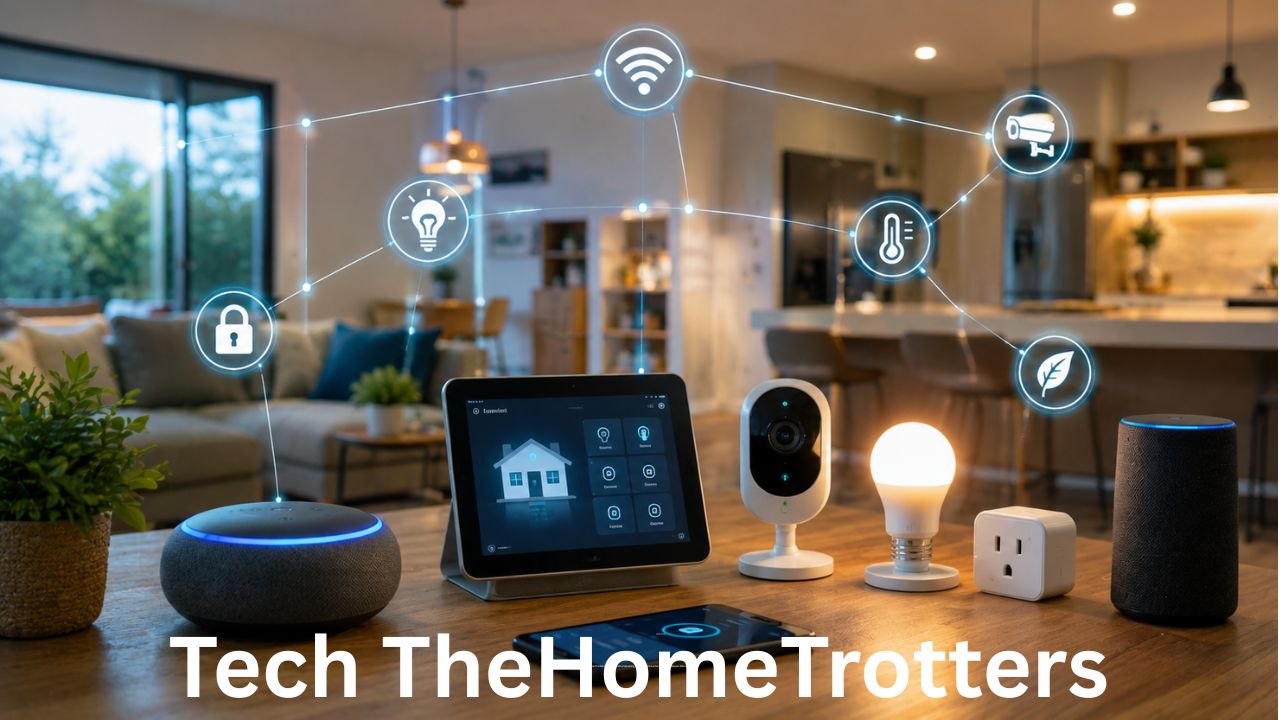
Smart home technology is another important part of the modern housing market.
Connected devices allow homeowners to monitor and control different household systems through mobile applications or automated settings.
Common examples include smart thermostats, connected lighting systems, video doorbells, smart locks, and home security cameras.
These devices can improve convenience and, in some situations, help households manage energy consumption.
For example, a programmable smart thermostat may reduce unnecessary heating or cooling when nobody is home.
Similarly, smart lighting systems can automatically switch off lights in unoccupied rooms.
From a real estate perspective, certain smart home features may make a property more attractive to buyers who value convenience and modern amenities.
However, not every smart device increases resale value.
Buyers should also consider installation costs, compatibility, cybersecurity, and ongoing subscription fees.
A home with reliable internet connectivity and thoughtfully integrated technology may offer a more practical experience than one filled with expensive but poorly connected devices.
How HomeRocketRealty Modern Technology Can Benefit Homebuyers
Modern real estate technology offers several potential advantages for people searching for homes.
One of the biggest benefits is access to property information.
Online listings allow buyers to compare homes according to location, size, price, and available features.
This makes it easier to narrow down options before contacting an agent or arranging a viewing.
Better property comparisons
Digital platforms allow buyers to review multiple properties without repeatedly traveling between locations.
They can compare photographs, floor plans, neighborhood information, and advertised prices.
More convenient communication
Online messaging, appointment scheduling, and document-sharing tools can simplify communication with real estate professionals.
Improved financial planning
Mortgage calculators and affordability tools help buyers estimate possible monthly payments.
These calculations are useful for early planning, although actual loan terms depend on lender requirements and individual financial circumstances.
Access to market information
Historical sales data and local market reports can help buyers understand whether an asking price appears reasonable.
These benefits make technology valuable during the research stage of buying a home.
Nevertheless, buyers should independently verify important information before making financial commitments.
Benefits of Modern Real Estate Technology for Property Sellers
Technology is not only useful for buyers.
Property sellers can also benefit from digital tools that improve marketing, communication, and transaction management.
One important advantage is wider property exposure.
Traditional advertising often focuses on a relatively limited local audience.
Online property platforms can make listings visible to interested buyers across different cities and regions.
Professional photography, detailed descriptions, and virtual tours can also improve how properties are presented.
Digital marketing tools may help sellers understand which advertisements attract attention and which property features generate interest.
Another benefit is easier communication.
Instead of managing every inquiry through separate phone calls, sellers and agents can use centralized systems to organize appointments and respond to potential buyers.
Digital document management may also reduce administrative delays.
However, sellers should avoid assuming that technology automatically guarantees a faster sale or a higher selling price.
Market conditions, property location, pricing strategy, and property condition remain important factors.
The Role of Cloud Computing in Real Estate
Cloud computing allows information to be stored and accessed through internet-connected systems.
In real estate, cloud-based services can help professionals manage listings, customer records, contracts, photographs, and transaction documents.
For example, an agent working with several clients may need access to property details while traveling between appointments.
A cloud-based system can make relevant information available through a laptop, tablet, or smartphone.
Cloud technology can also support collaboration between agents, administrative teams, and other authorized professionals.
Some important advantages include:
- Access to documents from different locations
- Easier collaboration between team members
- Centralized property information
- Reduced dependence on physical paperwork
- More organized customer communication
Despite these advantages, cloud services require proper security measures.
Sensitive financial information, identity documents, and transaction records should be protected through appropriate access controls and secure storage practices.
Digital Transactions and Electronic Signatures
Property transactions often involve substantial paperwork.
Purchase agreements, disclosures, financing documents, and other legal records may require signatures and careful review.
Electronic signature technology can make certain parts of this process more convenient.
Instead of arranging an appointment solely to sign a document, authorized parties may be able to review and sign paperwork electronically.
This can be particularly helpful when buyers and sellers live in different locations.
However, the legal acceptance of electronic signatures varies depending on the jurisdiction and document type.
Some property-related documents may still require notarization, witnesses, or additional verification.
Buyers and sellers should confirm local legal requirements before relying entirely on digital signing tools.
Convenience should never replace careful contract review.
Cybersecurity and Privacy in Digital Real Estate
As real estate services become more digital, cybersecurity becomes increasingly important.
Property transactions may involve personal identification documents, banking information, addresses, and other sensitive records.
If these details are handled improperly, users may face privacy violations or financial fraud.
One particularly serious risk involves fraudulent payment instructions.
Criminals sometimes impersonate real estate professionals and attempt to redirect property-related payments to unauthorized accounts.
Buyers and sellers should verify payment instructions through a trusted communication channel before transferring money.
Other useful precautions include:
- Using strong, unique account passwords
- Enabling multifactor authentication
- Avoiding suspicious property listing links
- Confirming the identity of agents and service providers
- Reviewing privacy policies before submitting personal information
- Keeping devices and applications updated
Technology can improve transaction efficiency, but security must remain a priority.
A reliable digital real estate experience depends on both useful features and responsible data protection.

Challenges of Using Modern Technology in Real Estate
Despite its advantages, technology also introduces challenges.
Understanding these limitations helps buyers, sellers, and property professionals make more balanced decisions.
Inaccurate property information
Online listings may contain outdated prices, incorrect measurements, or incomplete property descriptions.
Users should confirm important details before making decisions.
Overreliance on automated estimates
AI-generated property valuations can be useful, but they may not fully account for renovations, structural conditions, or unique neighborhood characteristics.
Limited digital access
Not everyone has reliable internet connectivity or feels comfortable using advanced online systems.
Real estate services should remain accessible to people with different levels of technical experience.
Privacy concerns
Digital platforms may collect personal information to provide customized services.
Users should understand how their information is collected, stored, and shared.
Technology-related expenses
Advanced software, professional virtual tours, and smart home equipment may involve additional costs.
For real estate professionals, these expenses should be evaluated against the practical benefits they provide.
Traditional Real Estate vs. Technology-Driven Real Estate
The difference between traditional and technology-driven real estate is not simply about replacing people with software.
Instead, technology changes how information is collected, presented, and managed.
| Feature | Traditional Approach | Technology-Driven Approach |
|---|---|---|
| Property Search | Agent recommendations and printed listings | Searchable online property databases |
| Property Viewing | Primarily physical visits | Virtual tours and physical visits |
| Communication | Phone calls and in-person meetings | Messaging, video calls, and online scheduling |
| Market Research | Manual comparisons | Digital reports and analytical tools |
| Document Management | Paper-based records | Electronic document systems |
| Marketing | Print advertisements and local promotion | Online listings and digital campaigns |
| Customer Support | Mostly business-hour communication | Digital inquiries and automated assistance |
Both approaches have advantages.
Traditional services offer personal interaction and local professional knowledge.
Technology-driven services improve convenience and access to information.
For many buyers and sellers, a combination of both approaches provides the most practical experience.
How Artificial Intelligence Could Shape the Future of Real Estate
Artificial intelligence is expected to remain an important area of innovation in property technology.
As systems improve, AI may help real estate professionals identify relevant market patterns, organize property information, and provide more personalized services.
For example, future search systems could become better at understanding detailed buyer preferences.
Instead of selecting only a price range and number of bedrooms, buyers might describe the lifestyle they want.
A search system could then identify properties that align with those preferences, subject to available and reliable data.
AI may also support building maintenance by analyzing information from connected sensors.
Property managers could potentially identify equipment problems earlier and schedule maintenance more efficiently.
However, these applications depend on accurate information, responsible system design, and appropriate human oversight.
Automated recommendations should not be treated as guarantees about future property values or investment returns.
Emerging Real Estate Technology Trends
Several developments could influence the next generation of property services.
Augmented Reality for Property Visualization
Augmented reality allows digital elements to appear over views of the physical environment.
In real estate, this technology can help buyers imagine how furniture, decorations, or renovations might look inside a property.
It may be particularly useful for empty homes or properties requiring improvements.
Energy-Efficient and Connected Buildings
Energy efficiency is becoming an important consideration in residential construction and renovation.
Connected building systems can help monitor electricity consumption, indoor temperatures, and equipment performance.
These features may support more efficient building management when properly installed and maintained.
Blockchain-Based Record Systems
Blockchain technology is being explored for certain property record and transaction applications.
Potential uses include maintaining tamper-resistant records and improving the traceability of selected transaction information.
However, blockchain does not automatically establish legal ownership or replace government property registries.
Its practical usefulness depends on legal frameworks, system integration, and adoption.
Predictive Property Analytics
Predictive analytics uses historical information and statistical models to estimate possible future outcomes.
Real estate professionals may use these tools to examine market activity, rental demand, or maintenance requirements.
Such predictions should always be interpreted carefully because housing markets are influenced by changing economic conditions.
How to Choose a Technology-Driven Real Estate Platform
With so many digital property services available, selecting a suitable platform requires careful evaluation.
A useful platform should provide accurate information, clear navigation, and reliable communication options.
Start by examining the quality of property listings.
Are descriptions detailed? Are photographs clear? Does the platform explain when listing information was last updated?
Next, consider transparency.
Users should be able to understand the services offered, any applicable fees, and how personal information is handled.
Security is equally important.
Look for secure account access, clear privacy practices, and trustworthy payment procedures.
It is also helpful to evaluate customer support.
Even advanced technology cannot answer every question or resolve every transaction issue.
Finally, avoid choosing a platform based only on impressive marketing claims.
Practical features, verified information, and dependable service matter more than technical terminology.
Why Human Expertise Still Matters in Modern Real Estate
Although technology can simplify many tasks, real estate remains a complex industry involving significant financial and legal decisions.
Experienced professionals can provide context that automated systems may overlook.
For example, a local real estate agent may understand neighborhood conditions, property demand, and negotiation practices that are not fully reflected in online data.
Home inspectors can identify physical problems that photographs and virtual tours cannot reliably reveal.
Mortgage professionals can explain financing options, while qualified legal professionals can help buyers understand contractual obligations.
Technology works best when it supports informed human decisions rather than replacing professional judgment.
The future of real estate is therefore likely to involve cooperation between digital tools and experienced professionals.
Frequently Asked Questions About HomeRocketRealty Modern Technology
1. What does HomeRocketRealty modern technology mean?
HomeRocketRealty modern technology can be understood as a topic connecting modern real estate services with digital innovations such as artificial intelligence, virtual tours, property analytics, and online transaction tools. Specific capabilities associated with the HomeRocketRealty name should be verified through official sources.
2. How does modern technology help homebuyers?
Modern technology helps homebuyers search for properties, compare listings, explore virtual tours, estimate financing costs, and communicate with real estate professionals. These tools can make the research process more convenient and organized.
3. Can artificial intelligence accurately predict property prices?
Artificial intelligence can estimate property values using historical sales, location information, and other available data. However, predictions are not always accurate. Property condition, unusual features, and changing market conditions can affect actual selling prices.
4. Are virtual home tours better than physical property visits?
Virtual tours are convenient for initial research and comparing properties. However, physical visits remain important because they allow buyers to examine conditions that may not be visible through digital images or interactive tours.
5. Is digital real estate technology safe to use?
Digital real estate tools can be safe when platforms use appropriate security practices and users protect their personal information. Buyers and sellers should verify identities, review privacy policies, and independently confirm payment instructions to reduce fraud risks.
6. Will technology replace traditional real estate agents?
Technology can automate certain administrative and research tasks, but it is unlikely to eliminate the need for professional expertise in every transaction. Negotiation, local market knowledge, inspections, and legal guidance remain important parts of buying and selling property.
Final Thoughts
HomeRocketRealty modern technology highlights an important direction in the real estate industry: the increasing use of digital innovation to make property searches, communication, and transactions more efficient.
Artificial intelligence, virtual reality, cloud computing, smart home devices, and data analytics are changing how people interact with the housing market.
For buyers, these technologies can provide convenient access to property information and more flexible ways to explore available homes.
For sellers and real estate professionals, digital tools can improve marketing, organization, and communication.
However, technology also brings challenges involving privacy, data accuracy, cybersecurity, and overreliance on automated recommendations.
The most effective approach combines the convenience of modern technology with careful research and qualified professional guidance.
As digital solutions continue to evolve, buyers and sellers who understand both their advantages and limitations will be better prepared to navigate the changing real estate market.
Also Read: UndergrowthGameLine Online Gaming Event: A Complete Guide for Gamers