










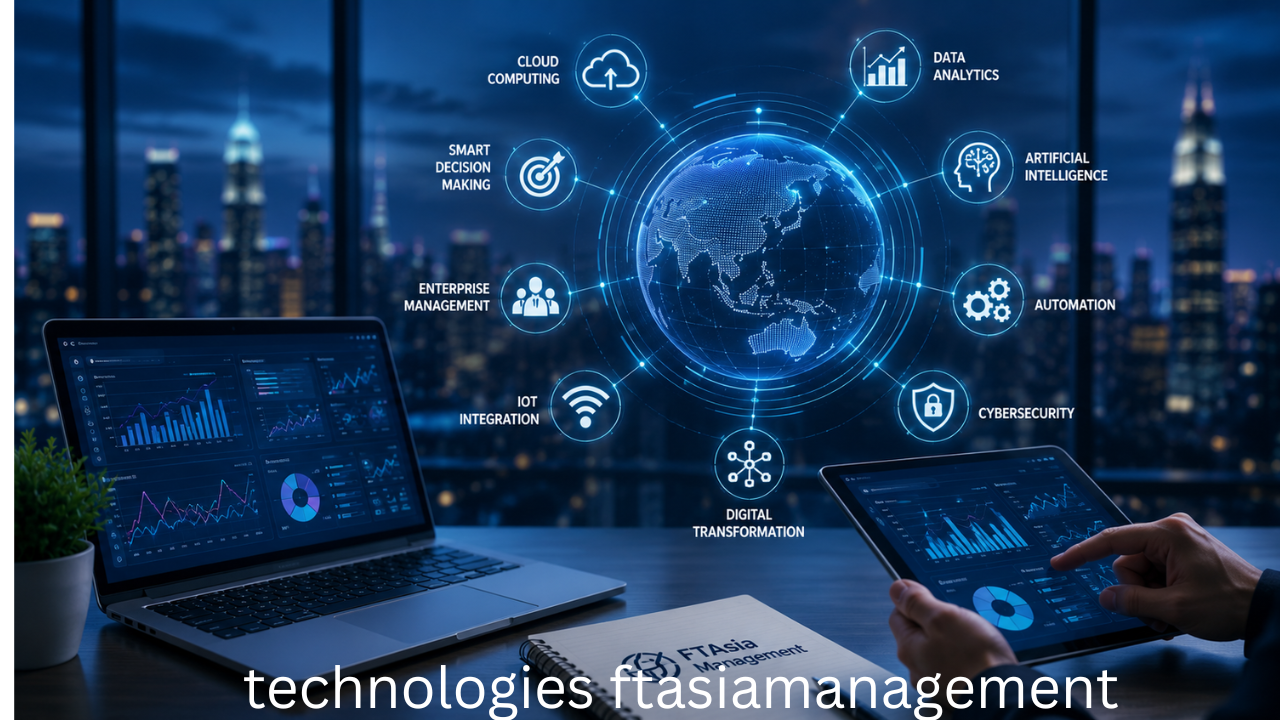
In today’s fast-moving digital economy, businesses are constantly searching for smarter ways to improve efficiency, reduce costs, and make better decisions. One topic that has gained increasing attention is technologies FTAsiaManagement, which represents the growing adoption of advanced business technologies, digital transformation strategies, and intelligent management solutions across modern organizations.
From artificial intelligence to cloud computing and data analytics, companies are investing in innovative technologies that streamline operations while helping managers make data-driven decisions. Whether you’re a business owner, entrepreneur, IT professional, or simply interested in emerging business technology trends, understanding technologies FTAsiaManagement can help you stay ahead of the competition.
This guide explores the technologies commonly associated with FTAsiaManagement, their benefits, practical applications, future trends, and why they matter for businesses in today’s competitive landscape.
What Is Technologies FTAsiaManagement?
Technologies FTAsiaManagement refers to the collection of modern digital tools, software platforms, and technology-driven management practices that help organizations optimize their operations. The concept focuses on using technology to improve productivity, enhance communication, automate repetitive tasks, and support informed decision-making.
Instead of relying on manual processes, businesses increasingly integrate intelligent systems that collect, analyze, and present valuable information in real time.
These technologies can be applied across multiple industries, including:
- Finance
- Healthcare
- Manufacturing
- Retail
- Logistics
- Education
- Technology companies
- Professional services
The ultimate objective is simple: improve efficiency while delivering better outcomes for customers and employees.
Why Modern Businesses Need Advanced Management Technologies
Traditional business management methods often involve paperwork, disconnected software, and time-consuming manual tasks. As businesses grow, these outdated systems become difficult to manage.
Modern management technologies solve these problems by offering:
- Faster decision-making
- Better collaboration between teams
- Automated workflows
- Improved customer experiences
- Enhanced data security
- Reduced operational costs
- Higher productivity
Organizations that embrace digital transformation are generally better equipped to respond to market changes and customer demands.
Core Technologies Used in FTAsiaManagement
Several innovative technologies play a major role in modern business management.
Artificial Intelligence (AI)
Artificial Intelligence helps businesses automate repetitive work while improving decision-making through intelligent analysis.
Common AI applications include:
- Customer support chatbots
- Sales forecasting
- Fraud detection
- Personalized recommendations
- Predictive analytics
- Intelligent document processing
AI allows managers to focus on strategic planning rather than routine administrative tasks.

Cloud Computing
Cloud computing has become the foundation of modern business operations.
Instead of storing information on local servers, organizations access secure cloud platforms that allow employees to work from anywhere.
Benefits include:
- Lower infrastructure costs
- Automatic software updates
- Easy collaboration
- Better disaster recovery
- Flexible scalability
Cloud-based management systems also simplify remote and hybrid work environments.
Big Data Analytics
Businesses generate enormous amounts of information every day.
Big data analytics transforms raw information into meaningful insights that support better decision-making.
Organizations use analytics to:
- Understand customer behavior
- Improve marketing campaigns
- Forecast demand
- Reduce operational waste
- Identify business opportunities
Data-driven organizations often outperform competitors because they make decisions based on measurable evidence rather than assumptions.
Automation Technologies
Automation eliminates repetitive manual work and reduces human error.
Examples include:
- Invoice processing
- Payroll management
- Email automation
- Inventory tracking
- Customer onboarding
- Report generation
Automation saves valuable time while allowing employees to focus on higher-value activities.
Cybersecurity Solutions
As businesses become more digital, protecting sensitive information becomes increasingly important.
Modern cybersecurity technologies include:
- Multi-factor authentication
- Endpoint protection
- Encryption
- Threat monitoring
- Identity management
- Secure cloud environments
Strong cybersecurity helps maintain customer trust while reducing the risk of data breaches.
Internet of Things (IoT)
IoT devices collect real-time operational data from connected equipment and sensors.
Businesses use IoT for:
- Equipment monitoring
- Supply chain tracking
- Energy management
- Predictive maintenance
- Smart manufacturing
Real-time monitoring helps organizations improve efficiency and reduce downtime.
Benefits of Technologies FTAsiaManagement
Businesses adopting modern management technologies experience numerous advantages.
Improved Productivity
Employees spend less time performing repetitive tasks and more time solving meaningful business challenges.
Better Decision-Making
Real-time dashboards and analytics provide managers with accurate information for faster decisions.
Cost Reduction
Automation and optimized workflows reduce labor costs, operational expenses, and unnecessary resource usage.
Enhanced Customer Experience
Businesses can respond faster to customer inquiries while delivering personalized services.
Greater Business Agility
Modern digital systems allow organizations to adapt quickly to changing market conditions.
Industries Benefiting from Technologies FTAsiaManagement
The adoption of management technologies spans nearly every industry.
| Industry | Technology Applications | Key Benefits |
|---|---|---|
| Healthcare | Electronic records, AI diagnostics | Improved patient care |
| Retail | Inventory automation, customer analytics | Better shopping experience |
| Manufacturing | IoT sensors, predictive maintenance | Reduced downtime |
| Finance | Fraud detection, automation | Improved security |
| Logistics | GPS tracking, route optimization | Faster deliveries |
| Education | Learning management systems | Better student engagement |
How Businesses Successfully Implement These Technologies
Successful implementation requires more than purchasing software.
Organizations typically follow these steps:
- Assess current business processes.
- Identify operational challenges.
- Choose technologies that align with business goals.
- Train employees effectively.
- Monitor performance regularly.
- Continuously optimize workflows.
Digital transformation works best when technology supports existing business objectives rather than replacing them entirely.

Challenges Businesses May Face
Although digital technologies offer many advantages, organizations may encounter challenges during implementation.
Some common obstacles include:
- High initial investment
- Employee resistance to change
- Integration with legacy systems
- Data privacy concerns
- Cybersecurity risks
- Skills shortages
Proper planning and employee training help minimize these challenges.
Future Trends in Technologies FTAsiaManagement
Business technology continues evolving rapidly.
Some emerging trends include:
AI-Powered Decision Support
Artificial intelligence will provide increasingly accurate business recommendations based on real-time data.
Hyperautomation
Organizations will automate entire business workflows rather than individual tasks.
Advanced Business Intelligence
Interactive dashboards and predictive analytics will become standard management tools.
Sustainable Technology
Businesses will adopt greener technologies that reduce environmental impact while lowering operational costs.
Intelligent Cloud Platforms
Cloud services will become more secure, scalable, and integrated with AI-powered applications.
Best Practices for Businesses
Organizations looking to maximize the value of technologies FTAsiaManagement should follow these recommendations:
- Invest in employee training.
- Prioritize cybersecurity.
- Use cloud-based solutions when appropriate.
- Monitor key performance indicators.
- Automate repetitive tasks gradually.
- Make decisions based on reliable data.
- Review technology performance regularly.
Following these best practices helps businesses achieve long-term success while minimizing implementation risks.
Frequently Asked Questions
What does technologies FTAsiaManagement mean?
Technologies FTAsiaManagement generally refers to modern digital tools, management software, automation systems, cloud platforms, and data-driven technologies that improve business operations and decision-making.
Why are management technologies important?
They improve efficiency, reduce operational costs, enhance collaboration, automate routine work, and provide better insights for business leaders.
Which industries benefit the most?
Healthcare, finance, manufacturing, retail, logistics, education, and technology companies all benefit significantly from advanced management technologies.
Is cloud computing essential for modern businesses?
While not mandatory, cloud computing offers flexibility, scalability, lower infrastructure costs, and easier collaboration, making it a valuable choice for many organizations.
How does artificial intelligence improve business management?
AI analyzes large amounts of data, automates repetitive tasks, predicts future trends, and helps managers make faster, more informed decisions.
What should businesses consider before adopting new technologies?
Organizations should evaluate their business goals, budget, employee readiness, cybersecurity requirements, and compatibility with existing systems before implementing new technology.
Final Thoughts
Technologies FTAsiaManagement represent the future of intelligent business management. As organizations continue embracing digital transformation, tools such as artificial intelligence, cloud computing, automation, analytics, and cybersecurity will become even more essential for maintaining competitiveness.
Businesses that strategically adopt these technologies can improve efficiency, reduce costs, enhance customer experiences, and make smarter decisions based on accurate data. While implementation requires careful planning and ongoing investment, the long-term benefits often outweigh the challenges.
Whether you’re managing a startup or a large enterprise, understanding and applying the principles behind technologies FTAsiaManagement can help build a more agile, productive, and future-ready organization.
Also Read: PlayBattleSquare Exploring Paris After Dark: The Ultimate Nighttime Adventure Guide



One thought on “Technologies FTAsiaManagement: How Modern Digital Solutions Are Transforming Business Management”
Comments are closed.